Alcohol Bottle Candles: Clean-Burning Soy vs Paraffin | Turn2Candles
Alcohol Bottle Candles: What They Are, How They Burn, and Why Soy Matters
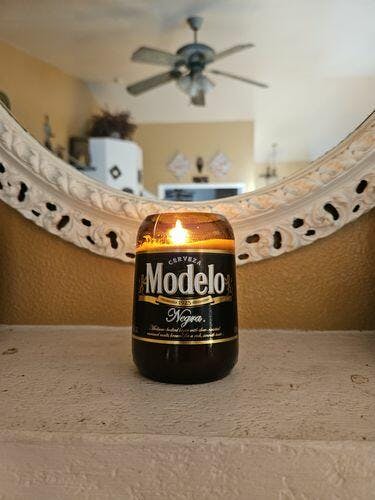
Alcohol bottle candles are candles made from reclaimed wine and liquor bottles and filled with wax for a clean, steady burn. When crafted correctly, they offer a unique look, a wide melt pool, and a strong, balanced scent throw—without feeling like a novelty.
At Turn2Candles, our Wick + Pour candles are hand-poured in small batches in North Carolina using reclaimed bottles, clean-burning soy wax, and premium fragrance oils. This page breaks down what bottle candles are, how they work, and what to look for if you want a cleaner burn.
Alcohol bottle candles (sometimes called bottle candles) are candles poured into reclaimed containers—most commonly wine bottles, liquor bottles, or other beverage glass. The bottle is prepared for candle use and then filled with wax and wicks.
The best bottle candles aren’t just “wax in a bottle.” They’re thoughtfully made with attention to:
Container preparation (cleaned, cut/smoothed if applicable, and made safe for use)
Wax selection (soy vs paraffin changes how a candle burns)
Wick sizing (the biggest factor in burn quality)
Fragrance formulation (a safe percentage designed for candles)
A properly made bottle candle should melt evenly across the top, maintain a steady flame, and deliver fragrance without excessive smoke or soot.
Are Alcohol Bottle Candles Safe?
Yes—when they’re made correctly. Like any candle, safety comes down to quality materials and proper build. A reclaimed bottle can be a great candle container when it’s prepared and paired with the right wax and wicks.
What makes a bottle candle safer (and burns better)?
Clean-burning wax (soy wax typically burns cooler and more slowly than paraffin, which can reduce soot for many setups)
Stable melt pool (a wide melt pool is ideal, but it has to be controlled to keep burn consistent)
Quality fragrance oils formulated for candles (not random scent additives)
Bottom line: a well-made alcohol bottle candle is as safe as a traditional jar candle—and often burns very evenly due to the wide opening. (As always: keep wicks trimmed, burn on a stable surface, and never leave a candle unattended.)
Soy Wax vs Paraffin in Bottle Candles
If you’ve searched “soy wax vs paraffin candles” or “which one burns cleaner,” you’re not alone. Wax type can affect how a candle burns—especially in wider containers like bottle candles. That’s why all of our Wick + Pour candles are made with clean-burning soy wax instead of paraffin.
Feature
Soy Wax
Paraffin Wax
Source
Plant-based (soy)
Petroleum-based
Typical burn
Often slower and cooler
Often hotter and faster
Soot potential
Typically lower when wicked correctly
Can be higher (varies with wick & fragrance)
Why it matters in bottles
More controlled melt pool in wide openings
Needs careful wicking to avoid smoke/soot
Wax isn’t the only factor—wicking and fragrance load matter too. But if your goal is a clean, slow burn for home fragrance, soy wax is a strong choice.
What Does “Wick + Pour” Mean?
Wick + Pour describes a candle style where wax is poured directly into a container that’s been prepared for candle use (like a reclaimed wine or liquor bottle), with the wick setup designed to burn evenly across a wide surface.
In practical terms, Wick + Pour candles are known for:
Wide melt pools that help fragrance fill a room
Balanced scent throw when properly wicked
Unique reclaimed-glass look (every bottle has character)
If you’ve searched “wick n pour,” this is the candle style you’re looking for.
Fragrance Oils vs Essential Oils in Candles
A common search is “essential oil vs fragrance oil candles.” Here’s the simple version: essential oils are not automatically safer or better for candles.
Fragrance oils are formulated for candle performance (hot throw, stability, and safe usage rates).
Essential oils can be volatile and may not perform well in wax—some also have lower safe-use limits for burning applications.
The most important factor is that the scent used is formulated and measured for candle safety. A clean, steady burn depends on the full recipe: wax + wick + fragrance + container.
You can choose from our full fragrance menu, or message us if you’d like a custom blend.
Hand-Poured in North Carolina (Small Batches)
Turn2Candles is based in North Carolina, where we hand-pour candles in small batches using reclaimed bottles, clean-burning soy wax, and a full fragrance menu.
If there’s a fragrance you love that isn’t listed on a specific product page—or you’d like a custom blend—just message us. We’ll help you choose a scent (or blend) that fits the vibe you’re going for.
Love these friendly made helpful candles😍. I (wifie) have allergies to mosquitoes & these candles are a helpful healthy & beautiful added attack to help fight mosquitoes in our home
Thank you 🙏🏼
Thank you so much, Mikal! We are glad you are enjoy the candle and making your home a healthier place!